

Welcome to Grind Guilds where habits become quests, progress becomes power, and you're never alone on your journey.
Step into a world where your to-dos are transformed into heroic tasks, and every good habit you build earns you XP.

Are You Truly Living Life to the Fullest?
In today’s fast-paced world, the lines between work and personal life often blur into a constant rush of activity. This hectic lifestyle can lead to imbalance, affecting our mental, physical, and emotional well-being. With so many responsibilities pulling us in different directions, it’s no wonder it’s hard to stay focused or motivated on long-term goals.


How Can Grind Guilds Support You?
Grind Guilds was created to help you take control of your journey toward self-improvement and balance. Whether you're building positive habits or breaking bad ones, the app keeps you motivated, organized, and on track, making your progress easier to manage and more rewarding over time.
Key Functions
Managing
habits easily
Tracking habits with statistics
Gamification
Challenging
with friends
Design Process

01. User Research
What do we know about the user?
In this project, multiple surveys and in-depth interviews with five potential users were conducted to gather valuable insights and identify user pain points.
INSIGHTS
#Mental
#Constancy
Building habits that support mental well-being, physical health, productivity, and self-discipline is essential for long-term personal growth.
#Teamplay
When people build habits together, shared motivation and accountability significantly boost their chances of success.
#Priorities
Even with a set habit schedule, people often skip their routines when higher-priority tasks come up and demand immediate attention.
#DontRush
Many people feel excited about the potential benefits of new habits, leading them to take on too many at once without careful planning. They stick with them for a short time, but soon feel overwhelmed and give up.
#notes
Some individuals use physical journals to track their habits, but spreading notes across multiple notebooks often leads to confusion and disorganization.
PAIN POINTS
#JustDoIt
A lack of motivation is one of the biggest obstacles to forming lasting habits.
#Guied
Many people struggle because they don’t have a clear roadmap for building habits effectively.
#Boring
Repeating the same actions day after day can lead to boredom and loss of interest.
#Flexible
Sticking to a fixed schedule for habits is challenging, especially for those with irregular or shifting work hours.
#Reminder
People often forget to complete tasks they've already scheduled, especially during busy days.
#Tracking
Without a clear view of their habit performance, it's hard for users to reflect, adjust, and improve their routines.
02. Competitive Analysis
What do
competitors have?
By analyzing the features and user flows of competitor products, we can strategically design solutions that offer a better experience and stand out from the competition.
Backed by behavioral science, Fabulous is an accountability partner in your pocket to help you make smart changes and build healthy habits.
Key features
Offer a wide selection of long-term routines and simple daily habits for users to choose from.
Build a global community where users can connect and grow together.
Provide voice-guided coaching and a library of inspiring success stories.
Strengths
Start with personalized questions to tailor each user's habit-building journey.
Use beautiful illustrations and inspiring posts to help users stay motivated.
Weaknesses
Users cannot easily access the option to create their own custom habits.
Users find it difficult to locate the habits they want from the available list.
Users are unable to set habits with flexible (non-daily) schedules.
There are no performance reports or statistics to track user progress.
Backed by behavioral science, Fabulous is an accountability partner in your pocket to help you make smart changes and build healthy habits.

Key features
Habitica gamifies daily life by turning tasks into monsters to conquer, rewarding users with in-game items and character level-ups.
Offers both public and private communities filled with supportive and helpful members.
Provides specific options to create good habits, break bad ones, and manage to-do lists.
Hosts open challenges that allow large groups of users to participate and collaborate.
Strengths
Offers a variety of activities like in-game shopping, rewards, and penalties to keep users engaged and motivated.
Features a strong accountability system where users can form parties, sharing responsibility for both successes and setbacks.
Weaknesses
The app can feel overwhelming due to the heavy presence of multiple gamification elements happening simultaneously.
Habitica places more emphasis on gaming features than on core habit-tracking functionality.
Backed by behavioral science, Fabulous is an accountability partner in your pocket to help you make smart changes and build healthy habits.

Key features
Easily manage habits with flexible scheduling whenever it’s most convenient.
Stay on track using basic statistics and a visual routine calendar.
Customize habits with personalized names, icons, and colors.
Strengths
Features an easy-to-navigate interface with strong brand recognition.
Offers a variety of habit suggestions to help users who aren't sure where to start.
Smart reminders notify users of their schedule throughout the day.
Weaknesses
Basic features require a high subscription fee, even though they are free in other apps.
Lacks dedicated features to help users break bad habits.
Habits and to-do lists are not separated, causing the checklist to feel overwhelming and cluttered.
Lacks a reordering feature, making it difficult for users to visualize the correct sequence of habits.
03. User Persona
who will be the target audience?
Based on user research, two primary target personas were developed to represent a broad range of users. These personas serve as a compass, aligning ideas and ensuring the product or service remains human-centered.
Age
24
Location
São Paulo, Brazil
Occupation
Junior UX Designer + Part-time Design
Living Situation
Lives in a tiny apartment with his partner
Hobbies
Indie games, doodling, café hopping, journaling, YouTube design tutorials
Lucas Tanaka

Background
Lucas recently moved out of his parents’ house and is trying to build a solid career in UX. He juggles freelance gigs with online design classes and has trouble sticking to a routine. He loves the idea of leveling up in life, but feels overwhelmed when his to-do list piles up and his anxiety kicks in. Social media often makes him feel like he's falling behind.
He’s trying meditation, Pomodoro timers, and even bought a physical habit tracker… but nothing sticks for more than a week. What keeps him going is small wins and accountability, even digital ones.
Pain Points
Constantly switching between work/study/tasks = mental fatigue
Easily distracted when working from home
Feels guilty when “resting” instead of working
Needs structure but resists rigid systems
Goals
Build a habit system that doesn’t feel like work
Feel progress even with small actions
Share progress with his partner/friends for support
Have a fun, low-pressure space to track tasks
Background
Amira is in her third year of teaching and loves her job, but it drains her energy. After work, she often has lesson planning, marking, and zero brain power left for personal goals like learning French or improving her fitness. She wants to feel in control of her time, not like she’s just surviving each week.
She’s a huge fan of RPGs like Stardew Valley and Dragon Age, and loves the idea of self-growth being visualized like an XP bar. Gamified productivity appeals to her because it feels less judgmental, like a game instead of a test she might fail.
Pain Points
Work spills into personal time constantly
Can’t keep consistent routines on bad mental health days
Gets overwhelmed when tasks feel vague or too big
Tends to self-isolate when unmotivated
Goals
Break big goals into “mini quests”
See visual proof of her progress
Stay motivated even when no one’s cheering
Build healthy routines and rituals that support her energy
Amira Salim

Age
27
Location
Manchester, UK
Occupation
High School English Teacher
Living Situation
Lives alone in a rented flat
Hobbies
Reading fantasy novels, bullet journaling, yoga, cooking
04. Solutions
How might we solve
user problems?
After identifying the key problems, we applied the "How Might We" technique to generate ideas that directly address users' pain points.
Im constantly finding a lack of motivation in habit-forming
how might we make the habit-building more fun and meaningful?
we can gamify the habit-building process and connect other users together
I dont know how to build habits effectively
how might we increase the awareness of the habit-forming method to the users?
we can give users a habit library or basic-to-advance habit-building journeys
I dont knowif i've made any progress in forming my habits
how might we show the users the process of their habit?
we can provide detailed ans useful statistics for users to track and analyze their process.
Because of my job, i find it difficult doing the same things in fixed hours
how might wemake users feel relaxing when it comes to the time of the schedule?
we can have flexible repetition options ans allow users to customize the time of day
Statistics doesn't have the tracking data i need
how might we broaden our types of data?
we can build tools or work with 3rd parties to support extract data corresponding to each type of habit
User Journey map
How will the users
experience the product?
It's critical to understand a big picture of user thoughts and emotions while they go through a series of actions to optimize their experience
User Goals
Users are looking to build better habits that support their personal growth and goals.
Users browse for habit-building apps and choose the ones that feel most visually engaging or motivating.
The user is ready to start a new habit and needs an easy way to get it going.
Users want to see how they’re doing over time and track progress on their habits.
Users crave more engaging features that keep them coming back, something fun, not just functional.
None
Process
Users reflect on tools or systems that could help them stay consistent with their habits.
Users try writing things down in a planner, but often find it too time-consuming or hard to keep up with.
Users look for helpful apps in the store or turn to friends for recommendations that actually work.
Users go through the onboarding flow to quickly get familiar with how the app works.
Users start setting up new habits they want to build.
After planning, users check in to see how their tasks or habits are progressing.
Users add specific details to their habits to stay clear and organized.
Users begin to approach habit-building with a more structured or science-backed mindset.
Users track their habit progress weekly or monthly to see patterns and stay motivated.
Once confident, users begin adding more habits to their routine.
Despite their efforts, users often stick to one habit while struggling to keep up with others.
Some users feel more motivated when they can build habits alongside friends or in a group.
User stop using the app
Problems
experience
Disapointed
Interest
Confused
Trust
Enjoy
Boredom
Ideas
Capture attention with eye-catching visuals and a concise, inviting app store description.
Design a clean, intuitive interface that feels effortless to navigate.
Offer a simple, helpful onboarding tutorial with the option to skip or revisit later.
Offer both basic and advanced habit setup options to support different user needs and levels of experience.
Include customizable time frames that adapt to varied and flexible schedules.
Incorporate evidence-based tips to help users build sustainable habits from day one.
Offer guided habit-building paths tailored to common personal goals.
Create a quick and satisfying check-in system to streamline daily tracking.
Enable rich note-taking with support for both text and images.
Enhance motivation through engaging gamified rewards and progress mechanics.
Let users reorder and group habits for better structure and clarity
Enable intelligent reminders that nudge users at the right time.
Show insightful, science-backed progress data to reinforce consistent effort.
Foster community with friend challenges, leaderboards, and unlockable achievements.
Continuously introduce fresh and engaging features to keep the experience exciting.
Expand the gamification layer with new mechanics to boost engagement and fun.
06. User Flow
What paths do the user take to complete a task?
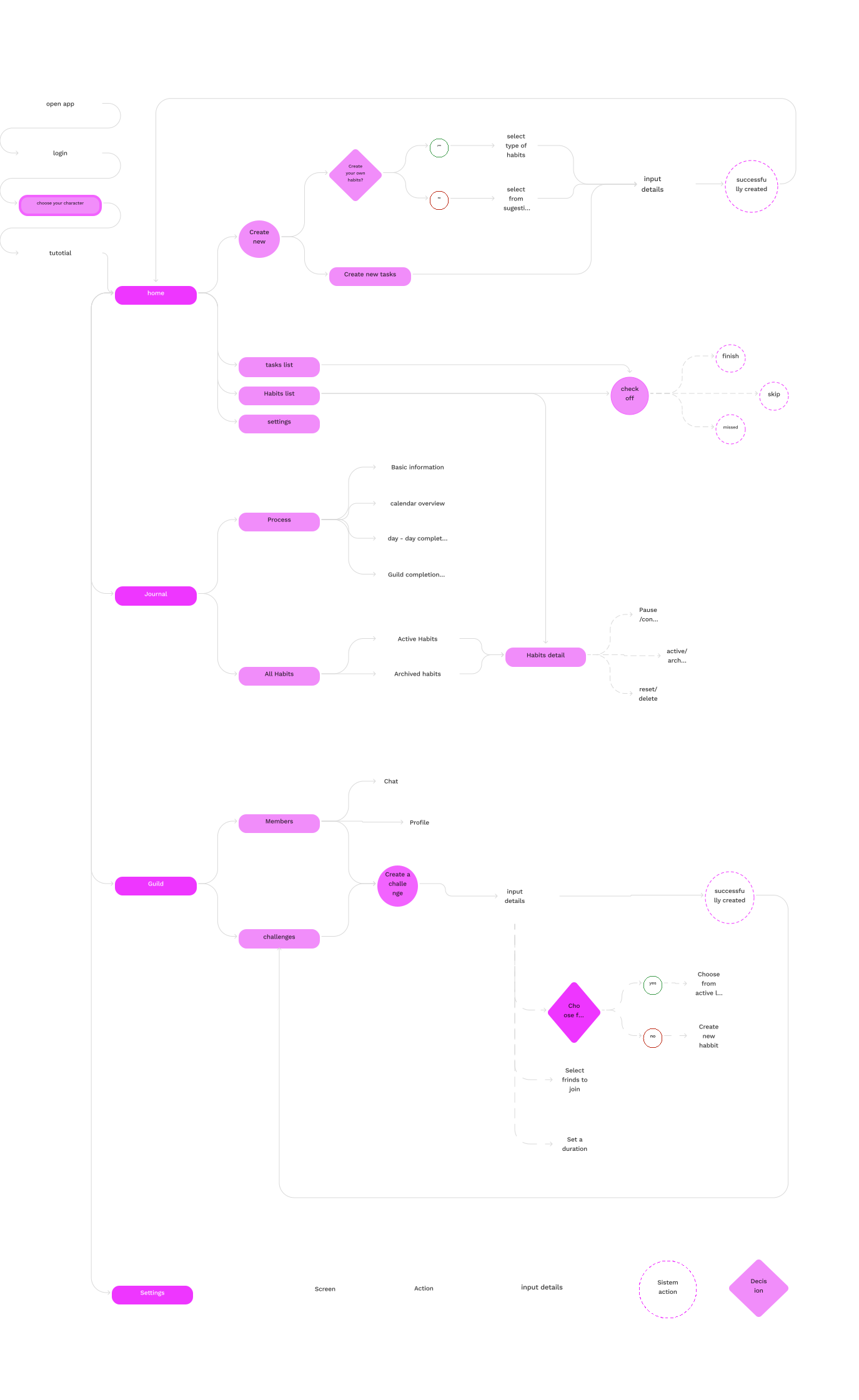
By focusing on a single path the user takes to complete specific task, we can increase our awareness about all the decisions they need to make or all the confusing steps users are having trouble.
07. Wireframes
How will the
application work?
It's essential to understand the user journey from a broader perspective capturing their thoughts and emotions as they move through each phase to identify opportunities for improving their overall experience.
08. UI Design
Screens and Prototypes
The general idea was to design a easy-to-use interface, so we used a san serif typefont with bright colors and simple illustrations to create a friendly atmosphere.
Onboarding
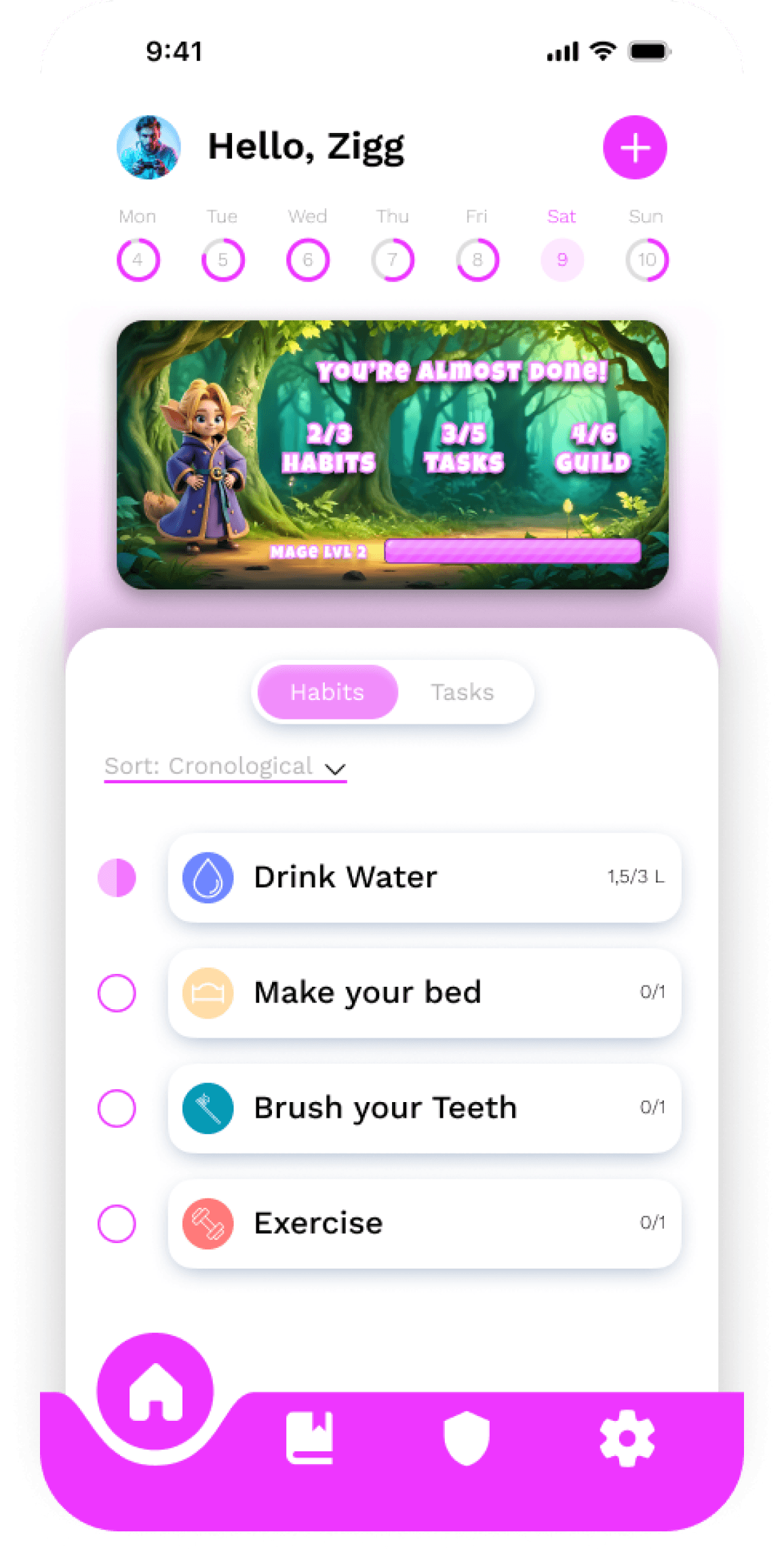
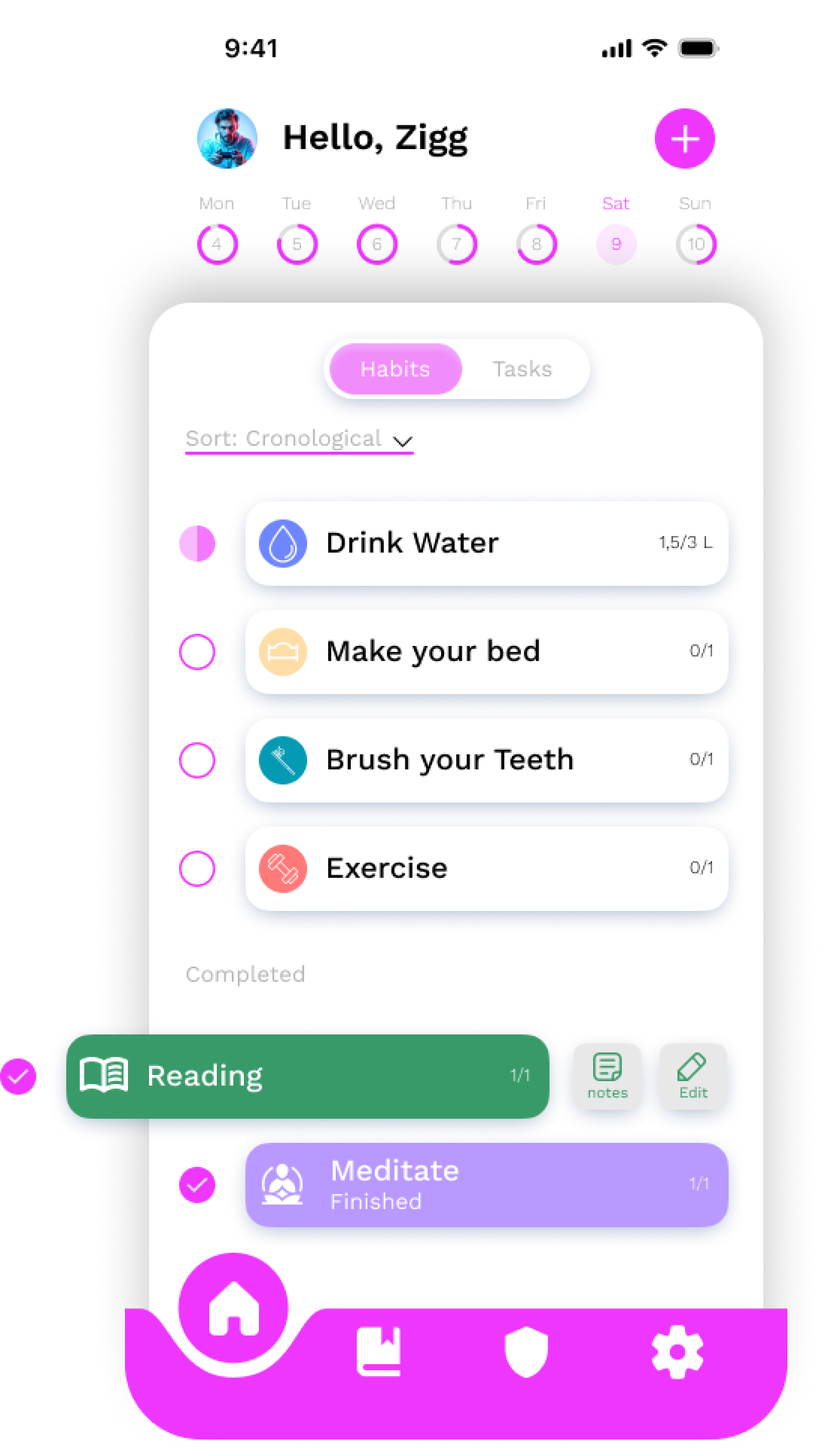
The main screen displays all of the day’s tasks, allowing users to check them off as they’re completed. Users can also choose which habit groups are shown, making it easier to scan and stay organized.


Home
The main screen displays all of the day’s tasks, allowing users to check them off as they’re completed. Users can also choose which habit groups are shown, making it easier to scan and stay organized.

Create new habit
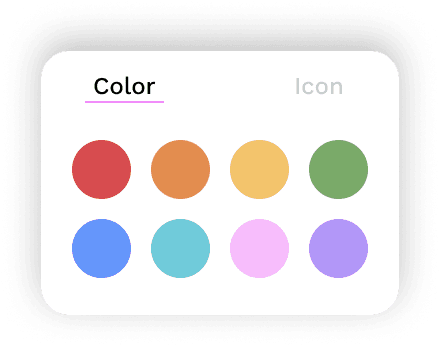
Users can start by creating their own habits or choose from a curated collection of essential habits to kickstart their journey. The habit creation screen offers both basic settings for a quick setup and advanced options for more detailed customization.


Track the process
Detailed and intuitive statistics help the user track and analyze theys whole habit forming process. The longer their streak is, the more motivated they become to mantain it.

Habits management
This screens displays the information ans statistics about each habit the user are building


Friends Guild
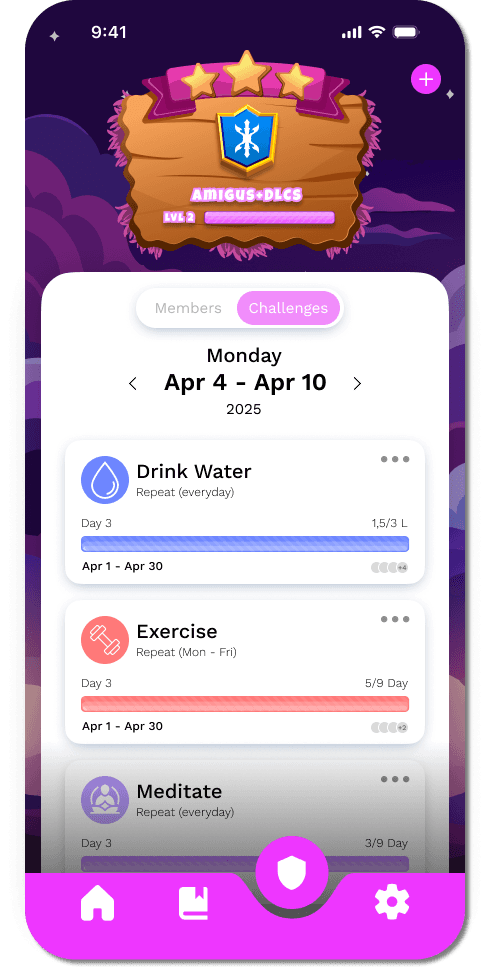
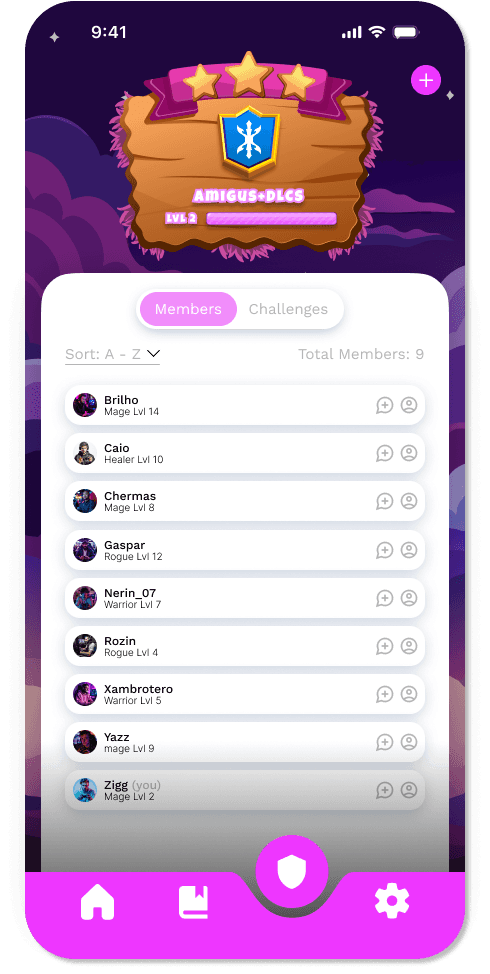
There is nothing more fun than doing a habit with friends and talking about the accomplishments we achieved. So now, you just need to form a guild with your friends, and start grinding!
let's create value